
Stinging Insects
We safely remove yellowjacket, hornet, and wasp nests and treat the stinging insects most active around CNY homes in late summer and fall.
A wasp or hornet nest near a doorway, deck, or playset is one of the few pest problems that can send someone to the emergency room, and it's not a job to tackle from a ladder with a can of spray. Yellowjackets in particular turn aggressive in late summer, and a disturbed ground or wall nest can produce dozens of stings in seconds — a serious danger for anyone with an allergy. In Central New York, calls peak from August into early fall, when colonies are at their largest and most defensive.
We safely remove yellowjacket, hornet, and wasp nests — including the risky ones in wall voids and underground — and treat the stinging insects active around your home. We come with the right protective equipment and the experience to handle a nest without turning a manageable situation into a swarm.
Know what's stinging you: the common CNY species
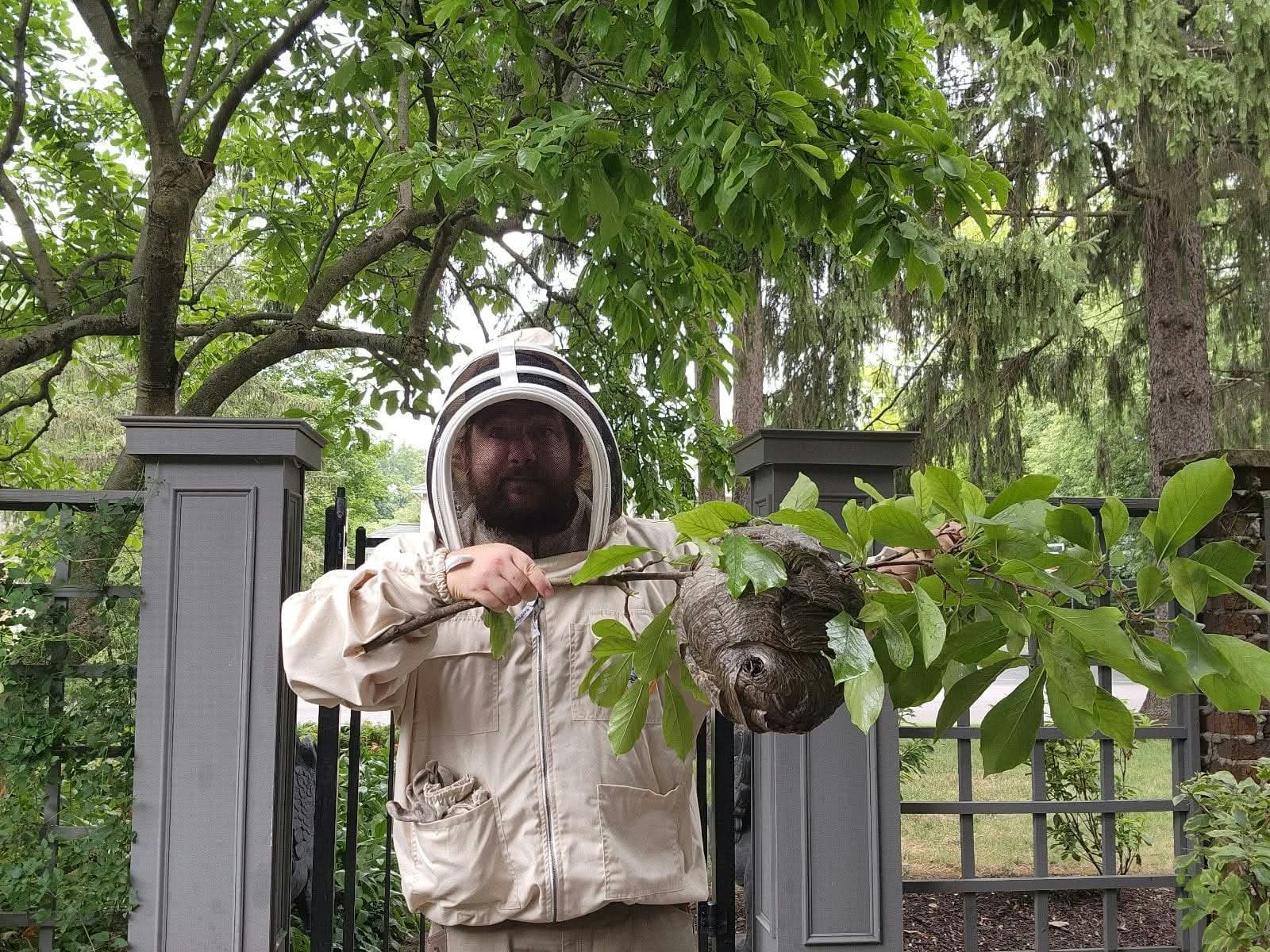
Not every stinging insect is a 'bee,' and the differences change how a nest should be handled. Yellowjackets are the aggressive, ground- and void-nesting wasps responsible for most late-summer stings; they nest in the soil, in wall voids, and under decks, and a disturbed colony can deliver many stings quickly. Bald-faced hornets — actually a type of yellowjacket — build the large gray, football-shaped paper nests you see hanging in trees and under eaves, and they defend them fiercely. Paper wasps build the smaller, open, umbrella-shaped combs under railings, eaves, and grill lids, and are the least aggressive of the group.
European hornets are large brown-and-yellow hornets, active even at night, that nest in hollow trees and wall voids and can strip bark from shrubs. Because each of these nests in a different place and reacts differently to disturbance, correct identification is the first step to removing one safely. A ground yellowjacket nest and an exposed paper-wasp comb are very different jobs, and treating them the same way is how people get hurt.
One important exception: honeybees are beneficial pollinators and are not exterminated. If you have a swarm or an established honeybee colony, the right move is a beekeeper who can relocate them, and we will point you in that direction rather than treat them. Our stinging-insect service covers the wasps and hornets — yellowjackets, bald-faced and European hornets, and paper wasps — that pose a genuine hazard around the home.
Signs of a stinging-insect problem
- Steady wasp or hornet traffic in and out of one spot — a soffit, wall gap, ground hole, or shrub.
- A visible paper nest under eaves, on branches, or in a shed or attic.
- Yellowjackets around trash, food, or sweet drinks outdoors in late summer.
- A buzzing or vibration inside a wall, which can mean a hidden nest in the void.
- Increased aggression near a specific area of the yard, especially in August and September.
How we treat it
- 1
Identification & locating the nest
We identify the species (yellowjacket, bald-faced hornet, paper wasp, or European hornet) and locate the nest, including hidden wall-void and ground nests.
- 2
Protective removal
We treat and remove the nest using proper protective equipment, timed to when the colony is least active to reduce risk.
- 3
Void & entry treatment
For wall and ground nests, we treat the void so the colony is eliminated rather than just the visible entrance.
- 4
Nest disposal
Where accessible and safe, we remove the physical nest so it doesn't attract scavengers or get reused.
- 5
Prevention advice
We point out the eaves, gaps, and conditions that invite nesting so next season is quieter.
What to expect
- Many nests can be handled in a single visit; large or hidden nests may need a short follow-up to confirm the colony is dead.
- We time treatment to reduce activity and keep your family and pets clear of the area during and shortly after.
- Ground and wall-void nests are riskier and are exactly the ones you shouldn't try yourself.
- For anyone in the household with a sting allergy, we treat these as priority calls.
Seasonality in Central NY
- Spring: queens start small nests. These are easy to remove early, before the colony grows — an ideal but often unnoticed window.
- Summer (Jun–Aug): colonies expand rapidly and nests become visible.
- Late summer to early fall (Aug–Oct): peak season and peak danger. Yellowjacket colonies are largest and most aggressive, and food-foraging brings them into contact with people at cookouts and trash areas.
- First hard frost ends most colonies, but nests should still be removed so they aren't reused or scavenged.
What it costs
Nest removal is priced by the species, the nest's location, and the risk involved. An accessible paper-wasp nest under an eave is straightforward; a yellowjacket nest deep in a wall void takes more work and care.
We give clear pricing before we start, and we'd always rather you call us than risk a reaction trying to remove an aggressive nest yourself.
How to prevent it
- Seal gaps in soffits, eaves, and siding in spring before queens start nesting.
- Keep outdoor trash covered and clean up food and sweet drinks at gatherings.
- Check sheds, playsets, and grills for early-stage nests through the summer.
- Don't seal an active wall-void entrance yourself — trapped wasps often chew into the living space.
Paper wasp, yellowjacket, or hornet?
Telling the three main stinging insects apart is easiest by their nests. Paper wasps build small, open, umbrella-shaped combs — you can see the individual cells — hanging under eaves, railings, and porch ceilings, usually with only a modest number of wasps. Bald-faced hornets build the large, enclosed, gray, papery football-shaped nests up in trees, on walls, and under overhangs. Yellowjackets are the ones you often can't see nesting at all: they favor holes in the ground, wall voids, and cavities behind siding, with a steady stream of insects coming and going from a single small opening.
The insects themselves differ too. Paper wasps are slender, with long legs that dangle in flight, typically brownish with yellow markings. Yellowjackets are shorter, stockier, and boldly banded black and yellow — the aggressive ones that crash picnics and hover around garbage and sugary drinks in late summer. Bald-faced hornets are larger and black with a white face and markings. The occasional European hornet is bigger still, brown and yellow, and is unusual in that it may fly at night and bump lit windows.
Behavior is the last clue, and it doubles as a safety warning. Paper wasps are relatively docile unless the nest is disturbed; yellowjackets and bald-faced hornets are far more defensive, especially as colonies peak in late summer. Ground-nesting yellowjackets are the ones people most often provoke by accident while mowing or gardening. Correctly identifying which you're dealing with — and where the nest actually is — shapes how the situation has to be approached, and it's exactly the kind of call that's safer left to someone with the right equipment.
Wasps and hornets in the Finger Lakes summer
Stinging-insect calls follow a sharp seasonal curve in Central New York, building through summer and peaking in August and September when colonies are largest and most defensive. The main players are yellowjackets, bald-faced hornets, and paper wasps, with the occasional large European hornet. Each nests differently: paper wasps build the familiar open, umbrella-shaped combs under eaves and railings; bald-faced hornets construct the big gray football-shaped aerial nests in trees and on structures; and yellowjackets frequently nest in the ground, in wall voids, and behind siding — the ones people stumble into while mowing.
Our built environment gives them plenty of options. Soffits, eaves, porch ceilings, deck railings, shed corners, and gaps behind siding are all prime real estate, and yellowjackets exploiting a small exterior gap can build a surprisingly large nest inside a wall void where it's neither visible nor easy to reach. Late-season colonies can number in the hundreds to thousands, which is why a nest that seemed minor in June becomes a serious hazard by Labor Day.
Timing shapes the right response. Early-season nests are smaller and easier to handle; late-season nests are larger, more defensive, and more dangerous to disturb. Either way, nests near doors, walkways, play areas, or high-traffic spots are the priority, because that's where the risk of stings to family, guests, and pets is highest.
Why stinging insects are a real hazard, not just a nuisance
Unlike a honeybee, yellowjackets and hornets can sting repeatedly, and a disturbed late-season colony can deliver many stings very quickly. For most people that means significant pain and localized swelling, but for someone with a venom allergy it can mean a life-threatening anaphylactic reaction. That risk is the single biggest reason not to treat a large or hidden nest casually — the stakes around an allergic family member or guest are simply too high.
Even without an allergy, certain situations are genuinely dangerous: a ground nest near where children play, a yellowjacket colony in the wall beside a frequently used door, or a nest disturbed while mowing or trimming. Multiple simultaneous stings are painful and, in volume, medically serious for anyone. Pets are vulnerable too, often provoking a nest out of curiosity.
There's also a structural wrinkle specific to wall-void yellowjacket nests: killing the colony without addressing the nest properly can drive the insects to chew through interior drywall looking for a new exit, bringing them into the living space. That's one of several reasons these situations reward doing it right the first time rather than improvising.
Why nest removal is a job to leave to a pro
Stinging-insect nests are the one pest situation where the DIY risk is immediate and physical rather than just a matter of effectiveness. Spraying a large yellowjacket or hornet nest — especially one that's partly hidden in a wall or high under an eave — provokes a defensive swarm, and a can of store spray rarely reaches the whole colony before the colony reaches you. Ladders and stings are a bad combination. For a big or awkwardly located nest, the safe move is to call rather than climb.
We treat nests with the proper equipment, protective approach, and materials to reach the colony thoroughly, including the ground and wall-void nests that are hardest and most dangerous for a homeowner to deal with. Reaching the nest itself — not just the insects flying around it — is what actually resolves the problem, and knowing how to approach a defensive late-season colony safely is most of the job.
For wall-void and ground nests in particular, method matters: treating the nest correctly and, where appropriate, handling the void so the colony doesn't redirect into the living space is the difference between a clean resolution and a worse problem. Same-day response on urgent nests near doors and play areas is exactly the kind of situation where a local, family-owned company that answers the phone earns its keep.
Frequently asked questions
Can you remove a nest inside a wall or in the ground?
Yes — and those are exactly the nests you shouldn't try yourself. We treat the void or ground nest so the whole colony is eliminated, using protective equipment and the right timing to keep everyone safe.
How fast can you come out for a wasp nest?
We prioritize stinging-insect calls, especially where there's a nest near a doorway or a household member with an allergy. Call us and we'll get you scheduled quickly.
Why are yellowjackets so aggressive in late summer?
By August and September the colony is at its largest and food is scarcer, so yellowjackets forage aggressively and defend the nest fiercely. That's when most stings and calls happen.
Is it safe to spray a nest myself?
For a small, exposed paper-wasp nest, sometimes — but ground and wall nests can produce dozens of stings when disturbed, and store spray often just angers a large colony. If there's any allergy risk or the nest is hidden, call a professional.
Will the wasps come back to the same spot?
A removed nest isn't reused, but a good nesting location can attract new queens next spring. We point out the eaves and gaps to seal so it doesn't become a recurring spot.
Do you remove the physical nest or just kill it?
Where it's accessible and safe, we remove the nest after treatment so it doesn't attract scavengers or get reused. Some wall-void nests are treated in place because opening the wall isn't warranted.
Are honeybees treated the same way?
No. Honeybees are beneficial and we don't exterminate them — if you have a honeybee swarm we'll point you toward a local beekeeper for removal. We handle wasps, hornets, and yellowjackets.
What time of year should I deal with nests?
Early is easier and cheaper — a spring nest is small. But most people notice nests in late summer at peak size, and those still need prompt, careful removal.
Is it safe to knock down a wasp nest myself?
A small, exposed paper-wasp nest early in the season is sometimes manageable, but large yellowjacket or hornet nests — and any nest hidden in a wall or high under an eave — are genuinely dangerous to disturb, because these insects sting repeatedly and defend the colony aggressively. If anyone nearby has a venom allergy, or the nest is big or hidden, don't risk it; call us.
Why are wasps worst in late summer?
Colonies grow all season and reach their peak size — often hundreds to thousands of insects — in August and September, right when they're also most defensive. A nest that looked minor in June can be a serious hazard by Labor Day, which is why late-summer nest calls spike.
There are wasps going in and out of my wall — what's happening?
That's usually a yellowjacket colony nesting in the wall void behind a small exterior gap. These need care: treating them incorrectly can drive the insects to chew through interior drywall looking for a new way out, bringing them into your living space. It's a situation to have handled properly rather than sprayed at from outside.
Can you come out the same day for a nest by my door?
We prioritize urgent stinging-insect nests near doors, walkways, and play areas because that's where the sting risk is highest. Call us and we'll get you scheduled as quickly as we can — being local and family-run means you reach a real person, not a national dispatch line.
Our guarantee
Covered by our defined-term service guarantee: if covered pests return during the service period, we re-treat at no additional charge. See Our Guarantee for terms and exclusions.
Read our guarantee terms →Stinging Insects across Central New York
We provide stinging insects across 6 counties of Central New York, the Finger Lakes and the Lake Ontario fruit belt, and the towns within them:
Tompkins County
Ithaca · Lansing · Dryden · Trumansburg · Newfield · Groton · Freeville · Cayuga Heights · Danby · Enfield
Schuyler County
Watkins Glen · Montour Falls · Odessa · Burdett · Tyrone · Beaver Dams
Chemung County
Elmira · Horseheads · Big Flats
Cortland County
Cortland · Homer · McGraw
Tioga County
Owego · Waverly · Candor · Spencer
Wayne County
Lyons · Newark · Palmyra · Sodus · Macedon · Williamson · Marion · Clyde · Wolcott · Pultneyville
Ready to solve it for good?
Free estimates. Family owned. Guaranteed work.